EBRD-Led Lenders Back 1.2 GW Solar and 600 MWh Energy Storage Project in Egypt

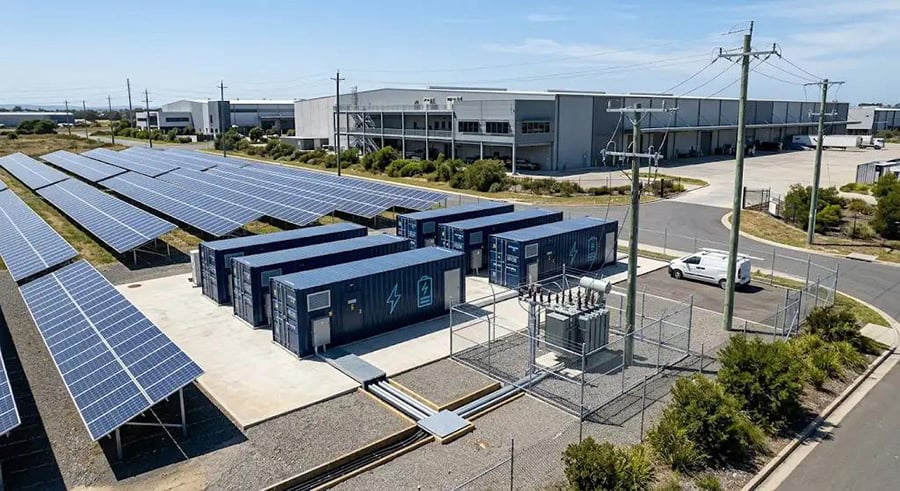
A European development bank is arranging up to $265 million for a 1.2 GW solar plant with 600 MWh of storage in Egypt, as part of a debt package of up to $566 million.
The European Bank for Reconstruction and Development (EBRD) said it is arranging a loan of up to $265 million for Nefer Menya for Renewable Energy, the special purpose vehicle developing a 1.2 GW solar plant and 600 MWh battery energy storage system (BESS) in Minya, Egypt.
The EBRD loan consists of a $160 million A-loan from the bank’s own funds, a $75 million B-loan from Bank of Jordan and up to $30 million in concessional financing from the Climate Investment Funds’ Clean Technology Fund under its Global Energy Storage Program.
Bank of Jordan said it is participating as both a B-loan lender and original hedge counterparty. Germany’s DEG, the Dutch development bank FMO and France’s Proparco are co-financing the project as part of an aggregate debt package of up to $566 million, according to the EBRD.
The EBRD’s project disclosure puts the plant at 1,000 MW (AC) and total project cost at $764 million. AIKO said in June that it had been selected as sole module supplier, providing all-back-contact (ABC) modules for 1.2 GWp of capacity.
Nefer Menya is 51% owned by Infinity Power Holding and 49% by HAU Energy, according to the EBRD disclosure. Infinity Power is a joint venture of Egypt’s Infinity and Abu Dhabi’s Masdar, in which the EBRD holds an equity stake. HAU Energy is owned by Meridiam, Hassan Allam Utilities and the EBRD.
Electricity will be sold to Egyptian Electricity Transmission Co. under a 25-year power purchase agreement (PPA). The battery will store daytime solar output for use during peak demand after sunset, the EBRD said, describing the project as one of Egypt’s first to pair large-scale solar with battery storage.
EVCity: Advanced Commercial and Industrial Battery Energy Storage Solutions
As utility-scale solar-plus-storage projects continue to expand worldwide, reliable and scalable battery energy storage systems are becoming essential for improving renewable energy utilization and supporting grid stability. As a global solar-storage-charging solution expert, EVCity provides advanced commercial and industrial energy storage solutions designed for diverse energy management needs.
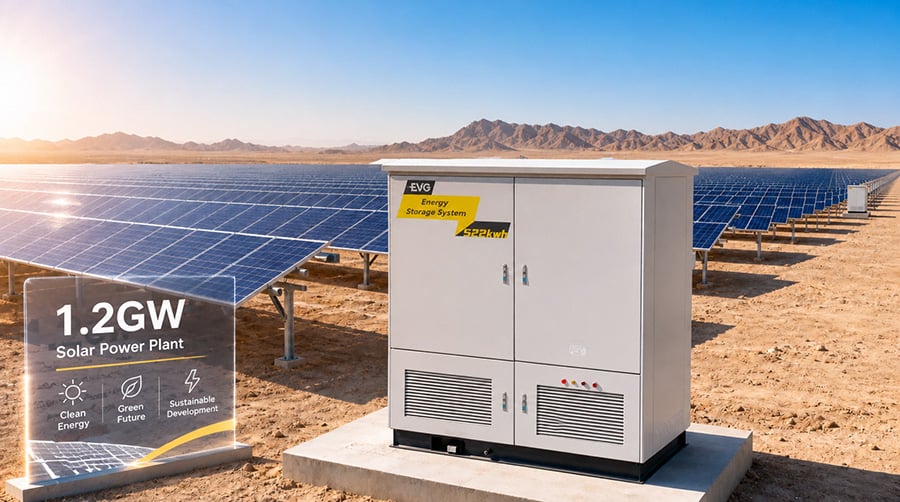
EVCity's energy storage systems integrate high-capacity LiFePO4 battery technology with intelligent battery management and liquid cooling technology. Featuring 314Ah battery cells, these systems offer rated power configurations of 250kW and 125kW, respectively, providing flexible options for commercial and industrial energy storage applications. With an IP55 protection rating, intelligent liquid cooling, and support for Ethernet and Modbus TCP communication, the systems enable efficient thermal management, reliable operation and intelligent energy monitoring. Their modular battery configurations also provide flexibility for different project requirements. By integrating solar PV generation with large-capacity battery storage, EVCity helps commercial and industrial users improve solar energy utilization, optimize electricity consumption and enhance energy management efficiency.
Egypt’s cabinet granted the project a golden license in August, with completion scheduled for September 2027, Ahram Online reported.
“By combining solar generation with utility-scale battery storage, this project will strengthen the country’s energy security and enhance grid resilience,” said Aida Sitdikova, EBRD director of sustainable infrastructure in the Middle East and Africa. The EBRD said the facility is set to become the largest solar power plant in Egypt and Africa.
Infinity Power CEO Nayer Fouad said the company is working toward “10 GW of operational renewable energy capacity by 2032.” Hassan Allam Utilities CEO Dalia Wahba said Egypt aims to generate 42% of its electricity from renewable sources by 2030.
The project supports the energy pillar of Egypt’s Nexus of Water, Food and Energy (NWFE) program, which aims to facilitate 10 GW of new private-sector renewable capacity while retiring 5 GW of inefficient fossil-fuel generation, the EBRD said.
Egypt has been adding solar-plus-storage capacity to manage rising peak demand. In August, Scatec completed its 1.1 GW Obelisk project with 100 MW/200 MWh of battery storage, also selling power to Egyptian Electricity Transmission Co. under a 25-year PPA, with the EBRD among its senior lenders.
Egypt’s electricity ministry said in February it plans to bring 600 MW of battery storage online before summer 2026.